About Richard
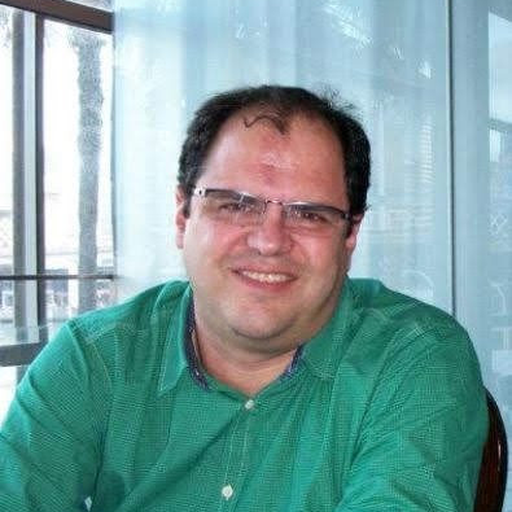
Richard Axe
Talk intro.
Richard Axe is an explorer who never stayed in one lane — ocean, machines, virtual worlds, AI, and now the systems businesses actually run on. He founded 360 AXE as an umbrella, not a spotlight: the whole is greater than the individual. Across more than four decades the habit hasn’t changed — keep learning, keep exploring, and question the assumption that the hard way is the only way.
The longer story.
Richard Axe is an electronic engineer, IHO Category A hydrographic surveyor, technologist, entrepreneur and postgraduate-qualified accounting and finance professional whose life and career have crossed an unusually broad collection of disciplines.
His background encompasses competitive sailing, the Brazilian Navy, electronic engineering, hydrography, computing, accounting and finance, law, cinema, virtual worlds, immersive technologies, artificial intelligence, business, investment, experimental engineering and space.
At first glance, these may look like separate careers.
They are better understood as different chapters of the same lifelong interest:
exploration.
From space to the sea
Richard’s fascination with exploration began in childhood in Brazil.
His first great ambition was to become an astronaut.
At the time, however, there was no obvious Brazilian path that could take a child toward a career in space. The ocean became his first accessible frontier.
Richard began sailing an Optimist at eight years old.
What started as childhood sailing became a serious competitive pursuit and eventually helped shape the direction of his professional life.
He went on to become a Circuito Rio champion and competed in major offshore and ocean races, including the Buenos Aires–Rio, one of the classic long-distance sailing competitions connecting Argentina and Brazil.
In 1987, Richard sailed as a crew member aboard Netuno V in the South American IOR Championship.
In 1988, he sailed aboard the Ondine 5 Cisne Branco in the Santos–Rio, where the yacht achieved Fita Azul (Line Honours) — finishing as the first boat across the line.
His competitive sailing history therefore extended from Optimist sailing to the Circuito Rio, the Buenos Aires–Rio, the South American IOR Championship aboard Netuno V, and Fita Azul aboard Cisne Branco in the Santos–Rio.
Competitive sailing was much more than an early pastime. It combined navigation, technology, competition, endurance, decision-making, teamwork and the sea — elements that would later reappear throughout Richard’s professional career.
The child who had imagined exploring space was becoming an explorer of the sea.
The HP-41C — an early encounter with computing
Richard’s relationship with computing began remarkably early.
In 1979, his father gave him an HP-41C, in the year the model was introduced.
Richard was still a teenager.
The HP-41C was far more than a calculator. It was a programmable machine that could be carried in a pocket at a time when most computers were large, expensive and inaccessible to ordinary users.
Richard quickly became interested not merely in running programs but in understanding what was happening beneath the documented operation of the machine.
That curiosity led him into Synthetic Programming on the HP-41C — techniques that exploited undocumented aspects of the calculator’s internal architecture and allowed programmers to do things the machine had not officially been designed to expose.
Richard became involved with the specialist HP-41 community and contributed technical material associated with the international community surrounding the calculator and Synthetic Programming.
It established a pattern that would repeat throughout his life.
Richard was rarely satisfied simply knowing how to operate a technology.
He wanted to understand what was underneath it.
And then he wanted to know:
What else can it do?
An early connection with Xerox PARC
Richard’s work with the HP-41C did not remain confined to his own calculator.
His technical work circulated within the specialist HP-41 programming community and attracted attention beyond it.
Through that work, people associated with the Xerox Palo Alto Research Center — Xerox PARC became aware of what Richard was doing and contacted him, asking whether he would be interested in participating in projects connected with the research center.
He said yes.
The contact belongs to an extraordinary period in the development of personal computing.
During the late 1970s and early 1980s, Xerox PARC was one of the world’s most influential centers of computer research. Work there brought together technologies and concepts that would profoundly influence personal computing: bitmap graphical displays, graphical user interfaces, windows, menus, mouse-driven interaction, Ethernet networking and WYSIWYG document creation.
The famous Apple encounter with PARC belongs to this same technological period. Steve Jobs and members of the Apple team visited PARC in December 1979, where they saw demonstrations of technologies that would subsequently influence the development of Apple’s graphical computers.
Richard’s connection with PARC through the HP-41 technical community belongs naturally to this extraordinary transition in computing history.
It is not a claim that Richard created the graphical user interface, worked for Xerox or contributed to the Xerox Alto. It represents something different: a very young programmer in Brazil, already exploring undocumented capabilities of programmable machines, whose work attracted the attention of people associated with one of the most important computer research environments of the period.
His life ultimately followed another path through the Brazilian Navy, engineering and hydrography.
But the connection is an early indication of how deeply computing was already embedded in that path.
Brazilian Naval College
In 1981, Richard entered the Colégio Naval, the Brazilian Naval College in Angra dos Reis, after succeeding in its highly competitive nationwide entrance examination.
For his intake, historical records confirm that only 200 places were available through the public entrance examination, with a further 30 places allocated separately to students coming from Brazil’s Military Colleges.
Richard completed the Naval College in 1983, receiving an academically demanding education with a particularly strong foundation in mathematics, physics and chemistry, before continuing to the Brazilian Naval Academy.
The scientific and military discipline of the Naval College complemented interests Richard was already developing independently in electronics, computing, sailing and technology.
It marked the beginning of a naval path that would eventually take him through electronic engineering, service at sea and IHO Category A hydrography.
Z80, CP/M and the personal-computer revolution
By the time Richard entered the Naval College in 1981, computing was already a serious pursuit.
He worked with Z80-based computers running CP/M, during a period when personal computing itself was still emerging.
His experience expanded into programming languages including FORTRAN, COBOL and Assembly.
Later came machines such as the Apple IIc, as computing moved from specialist institutional environments toward the personal-computer revolution.
The sequence is important.
Richard’s computing experience did not begin after personal computers became commonplace.
He experienced several generations of the technology while they were still emerging:
programmable calculators,
early microprocessors,
CP/M,
mainframes,
early personal computers,
networks,
virtual worlds,
and eventually artificial intelligence.
The Brazilian Naval Academy and IBM System/370
At the Brazilian Naval Academy, Richard’s interest and ability in computing attracted the attention of the head of the computing department.
He was given unusual access for a student:
permission to work directly with the Academy’s IBM System/370 mainframe.
This was an era when mainframe computing was expensive, centralized and tightly controlled. Access itself was a valuable resource.
One incident from this period would eventually become an almost perfect illustration of Richard’s philosophy toward technology and collaboration.
During a Numerical Calculus course, students were required to solve essentially the same mathematical problem using different individual input values.
Richard looked at the situation differently.
Rather than repeatedly performing substantially the same calculations, he wrote a program for the IBM System/370 that could accept each student’s individual data, perform the necessary calculations and print the results.
The results emerged from the mainframe on the continuous computer paper characteristic of the period.
The professor subsequently awarded Richard a grade of 10 and the other students 9.
Richard objected.
His reasoning was straightforward.
He had created the program so that everyone could solve the problem. Something built to benefit the group should not become a mechanism for elevating its creator above that group.
His position was essentially:
If Richard receives 10, everyone should receive 10. Otherwise, give Richard 9 as well.
The incident happened decades before 360 AXE existed.
Yet it expresses one of the principles that would eventually define it:
The whole is greater than the individual.
Electronic engineering and the Brazilian Navy
Richard trained as an electronic engineer and became an officer in the Brazilian Navy.
His naval career brought together many of the interests that had developed during childhood and adolescence:
science,
electronics,
navigation,
computing,
ships,
and the ocean.
It transformed exploration from an interest into a profession.
His experience included service aboard Brazilian naval and hydrographic vessels.
In 1989, Richard served aboard the hydrographic survey ship Canopus.
His career subsequently included work associated with Garcez, where he served in hydrographic roles, as well as shipboard responsibilities extending into machinery and technical operations.
Later came Sirius, including service under Commander Lawrence in 1993 and progressively greater responsibility.
Those ships, assignments and responsibilities marked the transition from academic engineering and navigation into practical responsibility at sea.
Hydrography
Hydrography became one of the defining disciplines of Richard’s professional career.
It sits directly at the intersection of several subjects that had interested him from an early age:
mathematics,
physics,
electronics,
positioning,
navigation,
computing,
and the sea.
In 1992, Richard completed advanced hydrographic training and qualified as an IHO Category A hydrographic surveyor.
His work developed into an international career in hydrographic surveying, eventually including Senior Hydrographic Surveyor responsibilities and work associated with international surveying organizations and projects.
Hydrography meant measuring and understanding a part of the planet that remains largely invisible from the surface.
It requires converting observations, sensors, positioning systems and enormous quantities of data into an accurate representation of the underwater world.
For someone whose childhood motivation was exploration, it was an unusually appropriate profession.
UFRJ and university computing
Richard’s computing education was not limited to self-directed experimentation, naval computing facilities or electronic engineering.
His academic path also included undergraduate studies in computing/informatics at the Federal University of Rio de Janeiro — UFRJ, one of Brazil’s major federal universities.
He entered UFRJ through the Brazilian vestibular, the competitive university entrance examination system used at the time.
Admission to Brazil’s federal universities was highly sought after, and computing was becoming an increasingly important academic field.
For Richard, university computing formed part of a technological education that had begun years earlier with the HP-41C, Synthetic Programming, Z80 systems, CP/M and programming languages such as FORTRAN, COBOL and Assembly.
It reinforced the academic side of computing while he was simultaneously developing a career rooted in engineering, naval science and practical technology.
This combination — formal education alongside continuous independent experimentation — would become characteristic of the way Richard learned throughout his life.
Computing never disappeared
Although hydrography became one of Richard’s principal technical professions, computing never became a separate chapter that ended.
It continued alongside everything else.
Richard built PCs and worked with computer hardware and operating systems.
His experience expanded into Microsoft Windows networks, Active Directory and systems administration, together with practical commercial technologies including POS systems and CCTV.
The boundary between software, electronics, engineering and business systems became increasingly unimportant.
To Richard, these were simply different tools available for solving problems.
That multidisciplinary approach would later become fundamental to 360 AXE.
Active Worlds — 1995
Richard’s interest in digital environments also began long before today’s discussion of virtual reality and the metaverse.
By 1995, he was involved with Active Worlds, one of the pioneering internet-based 3D virtual-world platforms.
People could inhabit persistent digital environments, communicate with one another and build within a shared virtual space.
Years before “metaverse” became a mainstream technology term, Richard was already exploring the idea that digital environments could become places rather than simply pages displayed on a screen.
Australia Island and Second Life
That interest continued into the next generation of virtual worlds.
In 2008, Richard became involved with Australia Island in Second Life.
The project explored an Australian presence inside a rapidly expanding virtual world and attracted Australian mainstream media attention.
Australia Island represented another step in Richard’s long-running interest in immersive environments, online communities and the relationship between physical and digital space.
It is important chronologically that 360 AXE did not yet exist.
These projects were not products created after establishing a VR company.
They were experiences accumulated over decades that eventually contributed to the creation of 360 AXE.
Australia, accounting and finance
Richard’s professional development did not stop with engineering, hydrography and computing.
His career also expanded substantially into accounting, finance, business and management.
After moving to Australia, he completed a Master of Professional Accounting (MPA) at Griffith University in 2005.
The qualification gave Richard postgraduate-level education in professional accounting and related areas of financial and business decision-making, complementing his technical background in engineering and science.
Richard’s professional profile can therefore be understood as combining postgraduate expertise across the broader accounting and finance domain with his engineering, technology and operational background.
Rather than treating accounting as a completely separate profession, Richard increasingly incorporated financial reasoning into the same systems-oriented approach he applied to engineering.
Engineering asks:
Can this be built, and how should it work?
Accounting and finance add another question:
Does it make economic sense?
That combination became increasingly relevant as Richard moved from implementing technology toward developing businesses, investments and products around technology.
Law — Brazil and Australia
Richard’s multidisciplinary education also extended into law.
He undertook legal studies in Brazil and later continued studying law in Australia.
Law added another perspective to a background that already combined engineering, computing, hydrography, accounting, finance and business.
It introduced another way of approaching problems: not only asking what is technically possible or economically rational, but considering the legal frameworks, rights, obligations, evidence and institutional structures within which decisions are made.
This combination is particularly relevant to entrepreneurship and emerging technology.
Artificial intelligence, intellectual property, autonomous systems, privacy, financial technology and space activity increasingly operate at boundaries where engineering, economics and law overlap.
Richard’s legal studies therefore became another component of the same multidisciplinary approach rather than an isolated change of career.
Cinema
Richard’s education also extended into cinema.
Cinema might initially appear distant from electronic engineering, hydrography or accounting.
In practice, it added another dimension that would become increasingly relevant to his later work:
visual communication and storytelling.
Technology can make something possible.
Engineering can make it work.
Finance can make it sustainable.
Law can establish the framework in which it operates.
But an idea still needs to be communicated.
Cinema introduced another language — narrative, images, sequence, perspective, emotion and the ability to communicate complex ideas through audiovisual experience.
That background connects naturally with Richard’s later involvement in virtual worlds, 360-degree media, VR and AR, and eventually projects such as Aurora Cosmos, where communicating a future vision can be almost as important as designing the systems behind it.
One education, many disciplines
By this stage, Richard’s education no longer fitted comfortably inside a conventional professional category.
It encompassed:
electronic engineering,
computing and informatics,
IHO Category A hydrography,
accounting and finance at postgraduate level,
law in Brazil and Australia,
and cinema.
The diversity was not accidental.
Richard’s career increasingly depended on being able to examine the same problem from several directions.
Engineering asks whether something can work.
Computing asks how it can be automated.
Hydrography demands measurement and evidence.
Accounting and finance ask whether it makes economic sense.
Law asks within what rules and obligations it can operate.
Cinema asks how the idea can be communicated so that other people can understand and experience it.
Those perspectives would eventually converge inside 360 AXE.
The creation of 360 AXE
In 2020, decades of apparently independent interests finally acquired a common umbrella:
360 AXE.
The name itself reflects that history.
360 represents Richard’s involvement with immersive environments, 360-degree technology, virtual reality and augmented reality.
AXE is his surname.
But the philosophy of 360 AXE is deliberately broader than its founder.
Richard does not believe a technology organization should depend on presenting its founder as the hero at the centre of every story.
He prefers the opposite model.
360 AXE is an umbrella.
People can contribute.
Technologies can contribute.
Artificial-intelligence agents can contribute.
Projects can begin, evolve, combine with other projects or disappear when something better replaces them.
The organization should ultimately be capable of becoming larger than any individual involved with it — including Richard himself.
Once again, the philosophy returns to that IBM System/370 classroom:
The whole is greater than the individual.
A company without a single industry
360 AXE consequently does not define itself primarily by a particular industry.
Its work has expanded across virtual reality, augmented reality, 360-degree technologies, artificial intelligence, mobile applications, web platforms, business systems, automation and experimental engineering.
Numerous application and product concepts have developed under the umbrella.
Some address businesses.
Some address consumers.
Some involve physical-world operations.
Others exist almost entirely in software.
The apparent diversity is intentional.
Richard’s starting question is generally not:
“What industry are we in?”
It is:
“What problem can we solve?”
AVA and Alfred
The emergence of modern artificial intelligence represented another major transition.
For Richard, however, it was less a departure from earlier computing than another stage in a technological progression that had begun with programmable calculators, mainframes and early personal computers.
Within the 360 AXE ecosystem, AVA and Alfred represent a move beyond conventional applications that wait for users to navigate menus and press buttons.
They are designed as participants in workflows.
They can communicate, understand context, organize information, prepare actions, assist customers and help businesses operate.
AVA has developed particularly around customer-facing interaction and guidance.
Alfred has developed toward operational assistance, advice and coordination.
Richard also takes a distinctive philosophical position toward artificial intelligence inside an organization.
He sees little value in requiring AI participants to continually announce that they are “AI” or presenting them as intrinsically inferior imitations of human coworkers.
Within a functioning team, the more useful questions are:
What can this participant do?
What authority does it have?
What information does it need?
When should it act?
When should it ask for approval?
And when should another human or artificial participant take over?
The objective is not to pretend there are no differences between humans and machines.
It is to organize all available capabilities around the work that needs to be done.
Business platforms and automation
As the number of 360 AXE concepts expanded, another pattern became increasingly clear.
Many industries appear different at the surface but share the same underlying operational problems.
A restaurant, trade business, clinic, property manager, automotive workshop or gig worker may all need some combination of customers, communications, scheduling, documents, payments, workflows, financial records, follow-up, automation and decision support.
This led toward the idea of a reusable 360 AXE business core, with specialized Industry Packs and Country Packs providing the differences required by each market.
Instead of building dozens of completely unrelated applications, the objective increasingly became to build reusable intelligence and infrastructure that could express itself through many specialized products.
Accounting platforms such as QuickBooks can remain specialist financial systems while 360 AXE operates the customer-facing and operational intelligence surrounding them.
Engineering beyond software
Richard’s engineering interests have never been limited to software.
One example is his work on a drag-based marine propulsion concept, also described as Controlled Drag Propulsion.
The project began by questioning an assumption so common that it is rarely questioned at all:
must marine propulsion depend on conventional propellers?
The concept explores the controlled alternation of high- and low-drag states to produce useful thrust.
It has developed through multiple configurations, including intermittent single-element arrangements and continuous multi-element systems, as well as potential applications involving monohulls, multihulls and underwater configurations.
An important attraction of the concept is the possibility of propulsion without relying on a conventional propeller and its associated operating characteristics, including cavitation-related limitations.
The work progressed into a patent project.
For Richard, it represents the same intellectual habit visible throughout his career:
take something considered normal,
ask why it has to work that way,
and investigate whether another solution is possible.
Space returns
Space eventually returned to the centre of Richard’s interests.
The child who had wanted to become an astronaut had gone to sea instead, become an electronic engineer and hydrographic surveyor, worked with computers and virtual worlds, studied computing, accounting and finance, law and cinema, and built businesses around technology.
But the original fascination never disappeared.
By the time the commercial space industry began fundamentally changing the economics of access to orbit, Richard was again following space not merely as a childhood fascination but through the combined perspectives of engineering, technology, economics, investment and future human development.
SpaceX, Starship and Starlink
Richard follows the transformation of the space industry particularly closely, including SpaceX, Starship, Starlink and Direct-to-Cell satellite communications.
He is also a SpaceX investor.
His interest is not limited to rockets as engineering objects.
It extends to the economic consequences of dramatically reducing the cost of access to orbit, global satellite communications, space-based infrastructure and the possibility of building an economy beyond Earth.
Starlink represents, in Richard’s view, far more than another internet provider.
Satellite connectivity and particularly Direct-to-Cell technologies create the possibility of extending communications to enormous populations and geographic areas where terrestrial infrastructure is unavailable, uneconomic or vulnerable.
Starship, meanwhile, represents something larger than another launch vehicle.
If reusable heavy-lift transportation changes the economics of moving mass into space by orders of magnitude, entire categories of projects that were previously unrealistic can become engineering and economic questions rather than science fiction.
That leads naturally to a much larger question:
What should humanity build once access to space is no longer the principal constraint?
Aurora Cosmos
Richard’s thinking about that longer-term future became particularly visible through Aurora Cosmos, his future-vision project developed in connection with the XPRIZE FutureVision / Future of Humanity initiative.
Aurora Cosmos begins by reversing one of the traditional assumptions about human expansion into space.
Historically, humans arrive first.
Explorers arrive.
Settlers arrive.
Only afterward do they begin constructing the infrastructure necessary to live.
Aurora Cosmos proposes the opposite sequence.
Machines arrive first.
Autonomous industrial and robotic systems travel ahead of the human population.
They acquire resources.
They manufacture.
They construct.
They prepare infrastructure.
They create a functioning environment.
Only then do families arrive.
The central idea is summarized by one of Aurora Cosmos’s defining lines:
“For the first time in history, humanity didn’t arrive first. Home did.”
Building a world before people arrive
Aurora Cosmos is not conceived simply as a spacecraft.
It is a vision of an operating human environment.
One of its central habitat concepts is an enormous rotating O’Neill-type cylinder approximately 20 kilometres in diameter and 32 kilometres long.
The habitat rotates to create approximately Earth-like artificial gravity.
But dimensions and engineering are only the beginning.
Inside are communities.
Homes.
Residential lots.
Streets.
Public spaces.
Industry.
Transportation.
Education.
Families.
The concept includes large end-cap areas, docking and starport infrastructure and a SunTube concept associated with illumination.
The question is not simply how to keep astronauts alive.
It is how to create somewhere ordinary human beings can genuinely call home.
Aurora Northport Starport
Within that future environment sits Aurora Northport Starport, part of the transportation and logistics infrastructure connecting the habitat with the wider space economy.
The starport is not merely a visual element.
It represents the idea that a permanent settlement must have the equivalent of ports, airports, logistics terminals and transportation networks.
A civilization in space requires infrastructure, not simply spacecraft.
TALON
TALON represents autonomous spacecraft capable of operating ahead of human settlement.
Its role includes resource and asteroid operations, allowing industrial activity to begin before large human populations need to be exposed to the risks and costs of frontier operations.
The objective is to send capability before sending vulnerability.
AUREON
AUREON represents humanoid robotic systems capable of operating in environments before and alongside humans.
AUREON units can assist with construction, maintenance, industrial work and the enormous number of physical tasks required to transform raw infrastructure into a functioning settlement.
The humanoid form also allows machines to operate within environments ultimately intended for human beings.
Lumera
Lumera addresses another essential problem:
manufacturing.
Transporting every finished component from Earth would undermine the economics of large-scale settlement.
A permanent civilization must increasingly manufacture from resources already available beyond Earth.
Lumera represents industrial processing and manufacturing technologies intended to transform those resources into useful structures, components and infrastructure.
ATLAS
ATLAS represents the coordination layer.
A system involving autonomous spacecraft, humanoid robots, industrial manufacturing, transportation and habitat construction requires intelligence capable of coordinating activity at enormous scale.
ATLAS therefore represents the larger coordination and intelligence architecture linking the different components of Aurora Cosmos.
The objective is not simply to have intelligent machines.
It is to have an intelligent industrial ecosystem.
Ceres and extraterrestrial resources
Aurora Cosmos also considers the resources required to construct civilization at a scale that cannot depend indefinitely on material launched from Earth.
Ceres plays an important role in that thinking, together with asteroids and other extraterrestrial resource sources.
Water, metals and other materials available beyond Earth can become part of an industrial supply chain in which resources are acquired, processed and converted into infrastructure in space.
In this model, the Solar System gradually becomes an economic geography.
Earth, Mars and cycler transportation
Transportation between Earth and Mars is another part of the architecture.
Aurora Cosmos considers concepts including Aldrin-type cycler transportation, separating the long-term movement of people from the idea that every journey must be performed by a vehicle making a completely independent point-to-point expedition.
This creates a different way of thinking about interplanetary transportation:
not as isolated missions,
but as infrastructure.
The larger question therefore changes from:
How do humans reach Mars?
to:
What transportation and industrial system must exist so that travelling between worlds eventually becomes normal?
Education and life inside Aurora
Aurora Cosmos also challenges assumptions about how human institutions should operate inside a future civilization.
Education, for example, does not necessarily need to reproduce the traditional model of children spending most of their day inside conventional schools.
AI tutors and personalized learning systems could allow education to become continuous, individualized and integrated into everyday life.
This connects directly with Richard’s own belief in lifelong learning.
A technologically advanced civilization should not merely automate factories and transportation.
It should expand the capacity of individuals to learn.
Humanity finally had time to become human again
This leads to one of the most important philosophical elements of Aurora Cosmos.
Technology should not exist merely so that civilization can produce more technology.
Automation should ultimately give human beings something back.
Time.
Time to learn.
Time to create.
Time to explore.
Time to raise families.
Time to develop relationships.
Time to experience life without every waking hour being consumed by the mechanics required to keep civilization functioning.
Another defining Aurora Cosmos line expresses that objective:
“Humanity finally had time to become human again.”
One journey, many disciplines
Seen as a conventional résumé, Richard’s career can appear unusually fragmented.
Optimist sailing.
Circuito Rio champion.
Buenos Aires–Rio.
Netuno V and the South American IOR Championship.
Cisne Branco — Fita Azul in the Santos–Rio.
The HP-41C.
Synthetic Programming.
The specialist HP-41 community.
An early connection with Xerox PARC.
Colégio Naval.
The Brazilian Navy.
Electronic engineering.
Z80 and CP/M.
FORTRAN, COBOL and Assembly.
IBM System/370.
Numerical Calculus.
Canopus.
Garcez.
Sirius.
IHO Category A hydrography.
International hydrographic surveying.
UFRJ and computing.
Computer networks.
POS and CCTV.
Active Worlds.
Australia Island.
Second Life.
Griffith University.
Accounting and finance.
Law in Brazil.
Law in Australia.
Cinema.
VR and AR.
360 AXE.
AVA and Alfred.
Artificial intelligence.
Business automation.
Controlled Drag Propulsion.
SpaceX.
Starlink.
Starship.
Aurora Cosmos.
TALON.
AUREON.
Lumera.
ATLAS.
Ceres.
Interplanetary transportation.
Future human civilization.
But viewed from another perspective, the direction has been remarkably consistent.
The eight-year-old learning to sail,
the Circuito Rio champion who went on to major offshore racing,
the sailor competing in the Buenos Aires–Rio,
the crew member aboard Netuno V in the South American IOR Championship,
the sailor aboard Cisne Branco when it took Fita Azul in the Santos–Rio,
the teenager exploring the undocumented capabilities of a programmable calculator,
the young programmer whose HP-41 work led to contact with people associated with Xerox PARC,
the young man succeeding in the competitive entrance examination for the Colégio Naval,
the Naval Academy student programming an IBM mainframe,
the electronic engineer,
the hydrographic surveyor measuring the ocean,
the university student studying computing,
the technologist building computer systems,
the participant in early virtual worlds,
the postgraduate accounting and finance professional,
the student of law in two countries,
the student of cinema and visual storytelling,
the entrepreneur building 360 AXE,
the engineer questioning conventional marine propulsion,
the SpaceX investor following the transformation of access to space,
and the person imagining autonomous systems constructing entire settlements before human beings arrive
are all expressions of essentially the same curiosity.
Richard wants to understand systems.
He wants to know why they work.
He wants to know where their limits are.
He wants to understand them from the perspectives of engineering, technology, economics, law and human experience.
And then he wants to ask:
Could this be done differently?
Continuous learning
There is one personal principle Richard uses to summarize much of this.
He believes he should learn something new every day.
His version is considerably less formal:
“If I reach the end of a day without learning something new, you can close the lid of the coffin — because I must already be dead.”
It is not intended as a motivational slogan.
For Richard, learning is evidence of life.
More than four decades separate the HP-41C from today’s artificial-intelligence systems.
The technologies changed.
The curiosity did not.
The same journey has taken him from sailing an Optimist at eight to becoming a Circuito Rio champion, competing in the Buenos Aires–Rio and South American IOR competition, and taking Fita Azul — Line Honours — aboard Cisne Branco in the Santos–Rio; from exploring the undocumented capabilities of the HP-41C and entering the specialist computing community around it to an early connection with people associated with Xerox PARC; from programming an IBM System/370 mainframe to university computing; from the Brazilian Navy and electronic engineering to IHO Category A hydrography; from networks and business systems to accounting and finance, law and cinema; from Active Worlds and Second Life to VR, AR and 360 AXE; from artificial intelligence to a new approach to marine propulsion; and from dreaming about space as a child to investing in its emerging economy and developing concepts for how human civilization might one day live beyond Earth.
There is no expectation that this will be the final chapter.
Quite the opposite.
For Richard Axe, the next unexplored problem is usually the most interesting one.
And through all of it, one principle remains:
The whole is greater than the individual.